Hubsessed Office Hours - Unified Revenue View - Oct 8, 2026
Hosts: Ryan Ginsberg, Chris Carolan
Thursday, October 8, 2026
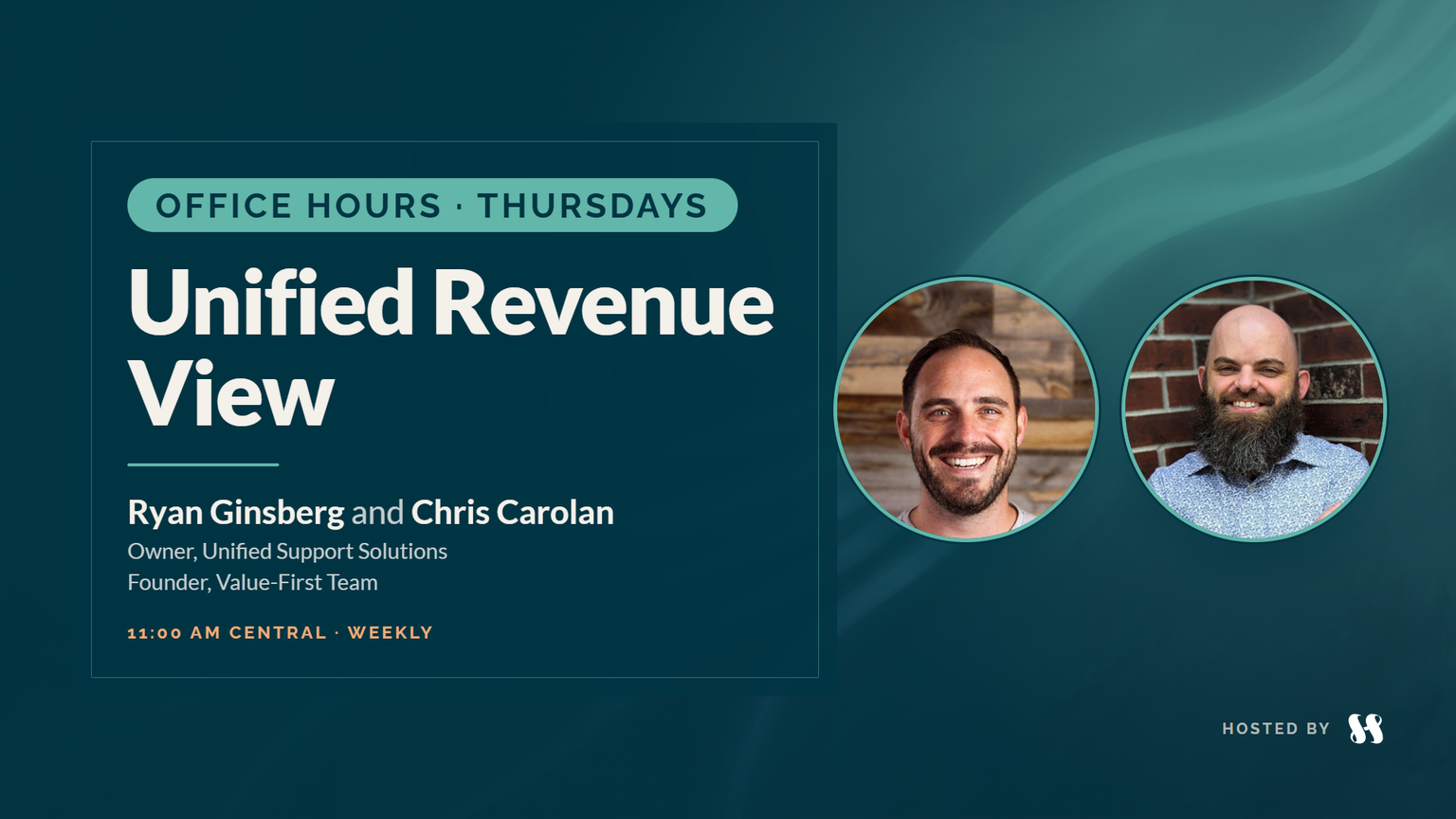
In week two, Ryan Ginsberg and Chris Carolan stay with the earned bucket of booked, billed, earned and paid. Starting from one post-sale email, they ask what the person who answers it needs to see, use the Amazon buying experience as the model, and make the case for HubSpot as the context layer.
Clips from this session
10 short cuts from this conversation.
Portrait
5 clips
Key takeaways
Booked, billed, earned and paid are four different buckets. Earned, in Chris's words, means we did something for them: what did we do for them lately?
Chris says the earn date is the one thing HubSpot contracts do not come equipped with out of the box right now.
Start from one post-sale moment: a customer three months in emails a question. Ask what the person who gets that email needs to know to help.
If helping depends on digging through documents, other tools or pinging the account manager, that person is not enabled to provide value in the moment.
Post-sale agents help when the data is trustworthy, the agent can reach what it needs, and the cost of a reliable answer makes sense.
The model is the Amazon buying experience: everything you need to understand where things stand, and easy help when you do need it.
Handoffs fail when people cannot see what they need to see to take the handoff. In most businesses the workaround is an hour-long meeting just to share context.
An earn date can depend on several processes owned by different people, such as a supplier changing a shipment date. Not all of it fits on a deal.
A unified customer view comes before a unified revenue view. If two teams disagree about which system holds your customers, you do not yet know who your customers are.
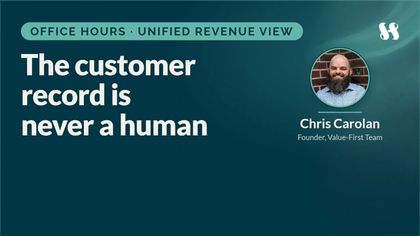
HubSpot is built around the contact record. An ERP's customer record is a company, never a human.
Document your existing processes before configuring new capabilities. The parts of the org that touch revenue may each have documentation, but none of it speaks to each other.
Ryan says HubSpot can support everything on that checklist with its native objects, as the context layer every team works from. Chris adds that unifying there does not mean replacing every other system.
Questions answered
- 0:00Welcome to week two: booked, billed, earned and paid
- 1:34Ryan's scenario: what does the person who gets that email need to see?
- 3:57Agents need trustworthy data, and they need to be cost-efficient
- 5:14The model: the Amazon buying experience
- 7:01The earned bucket: what did we do for them lately?
- 8:25The playbook, and why handoffs between teams fail
- 9:41A story from Chris's last in-house role: sharing context across systems
- 12:00Why the ERP could not fill the spreadsheet: one silo and the earn date
- 15:10Siloed systems, and processes nobody designed
- 18:59The prerequisite: a unified customer view
- 19:29Do you know who your customers are?
- 20:35Built around the contact record
- 23:04Why B2B does not ask for an Amazon-like experience
- 24:04Document your existing processes first
- 25:45Can HubSpot support all of that? The context layer
- 27:11Why HubSpot, and the close
Transcript
This transcript was generated by AI and may contain errors. It is provided to help you skim and search the conversation.