Read the recap

Back to Hubsessed Office Hours: AI-Native

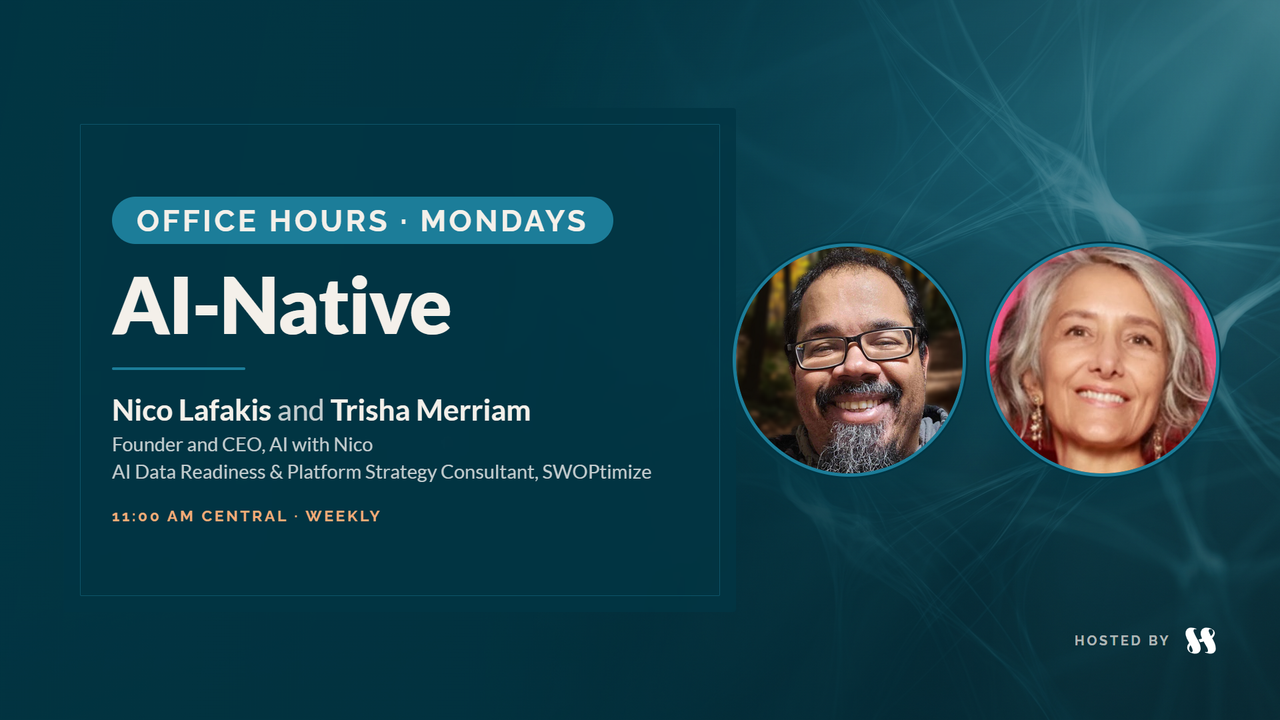
Hubsessed Office Hours - AI-Native - Oct 19, 2026

  • Nico LafakisHost
  • Trisha MerriamHost

Monday, October 19, 2026
Sign in to watch the full replay and read the transcript.

Nico Lafakis and Trisha Merriam, with Chris Carolan in the room, took questions on closing a task once its property is filled in without Data Hub and on clients whose contracts say no AI, then talked Claude versus Breeze. Most answers came back to Breeze, and to making reps feel safe talking to it.

Clips from this session

Key takeaways

Before reaching for custom code or Data Hub to close a task once its property is filled in, Chris's advice is to ask Breeze Assistant what it can see: the task, its data and what it is associated to.

In Chris's view, outside AI tools lag on the HubSpot data model; their training data still says tasks were hard to reach, and tasks are now very close to an object like any other.

Nico's workflow pattern: give each task type a generalized name, then use one workflow to set the task on the deal and one that listens for the property and marks the task complete.

Turning HubSpot's AI off can leave a portal unable to use Breeze; Trisha's alternative is a policy for each client on what data goes into the portal in the first place.

With older contracts, Chris would raise AI with the client first, with one or two use cases ready so the account manager is confident.

A basic step Trisha builds into every engagement: look at what Breeze's agent context page put into each section.

Reps can capture event contacts by telling Breeze in the HubSpot mobile app who they met and what they talked about, with follow-up automation set up behind it.

Chris sees spreadsheets persist because they feel safe: a separate file AI will not see, where nobody else's data gets touched. The goal is making reps feel safe talking to Breeze.

Nico's four tenets for using AI: think critically, explore deeply, push limitations and treat it like a person, and give it the context it needs.

Nico's view on Claude versus Breeze: ask what the one goal is first, since most of what people are trying to solve is already in Breeze, including shared projects.

Use a model where reasoning or synthesis is needed; for one-and-zero changes like a task status, plain automation is more reliable.

Nico measures a change by whether it makes someone's life easier, and Trisha starts AI adoption with something small that affects people personally many times a day.

Related episodes